
We sell all six types, so we have no reason to push you toward one. Here is how we would explain the differences to a friend, including the downsides.
Automatic
A mechanical movement wound by the motion of your wrist. No battery. People buy automatics for the feel of it: a sweeping seconds hand, a movement you can see through the caseback, no electronics.
What to know before you buy: an automatic is less accurate than quartz. Ours are regulated to roughly ±10 seconds a day, which means you may adjust it every couple of weeks. If you leave it in a drawer for two days it stops, and you set the time again. It is also thicker (ours are 11–13 mm) and needs a service every 5–7 years, which costs money. If any of that annoys you, buy quartz.
Quartz
Battery-powered, accurate to within about 15 seconds a month, thin, and low-maintenance. A battery lasts about three years and any jeweller can change it.
What to know: the seconds hand ticks once per second rather than sweeping, and there is nothing to look at through the caseback. Some people find that less charming; others never think about it. Quartz is the practical choice and there is no shame in it.
Chronograph
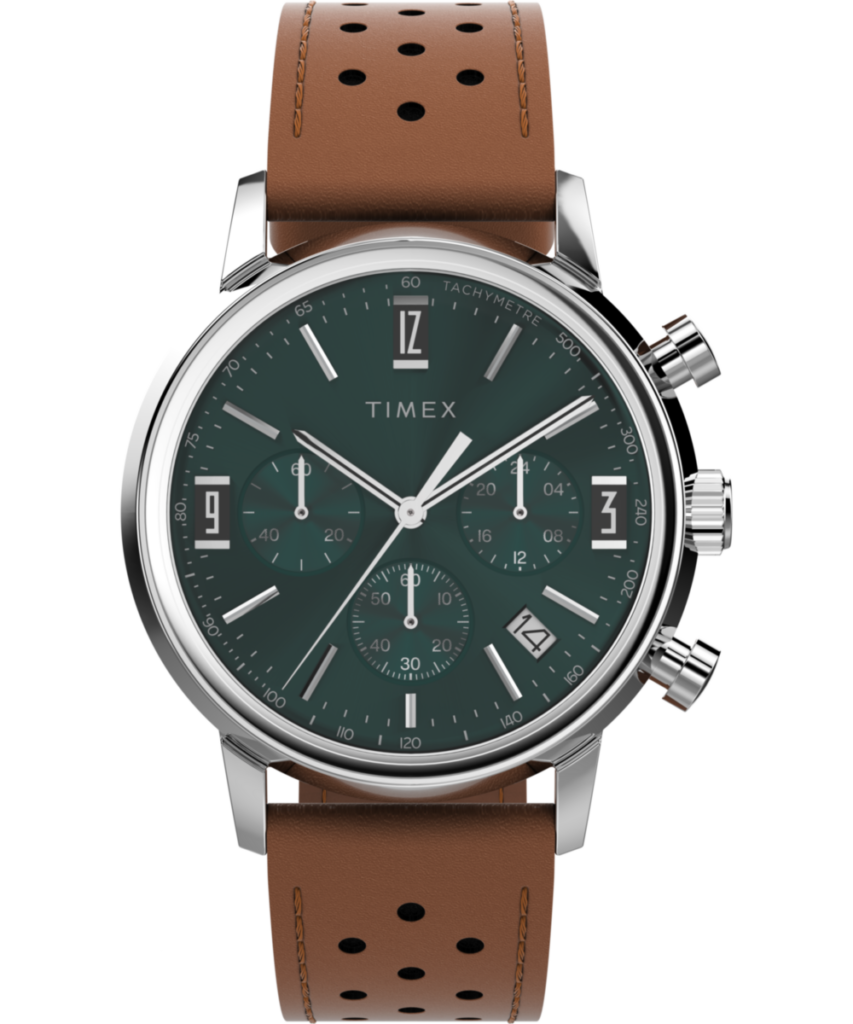
A watch with a built-in stopwatch, run from the pushers on the side of the case. Useful for timing anything; mostly bought because the sub-dials look purposeful.
What to know: the extra mechanism makes the case thicker and the dial busier. Ours are quartz chronographs at 11–12 mm; a mechanical chronograph would be thicker again and cost several times more. If you rarely time things, a plain three-hand watch is easier to read at a glance.
Dive
Rated to 200 m, with a rotating bezel to track elapsed time and a screw-down crown. Built for the water; worn mostly on land because the style is popular.
What to know: dive watches are the heaviest and thickest things we make (about 13 mm, 150–165 g on the bracelet). Under a shirt cuff they can catch. If you want the look but not the bulk, our 40 mm Sound is smaller than the 42 mm Puget.
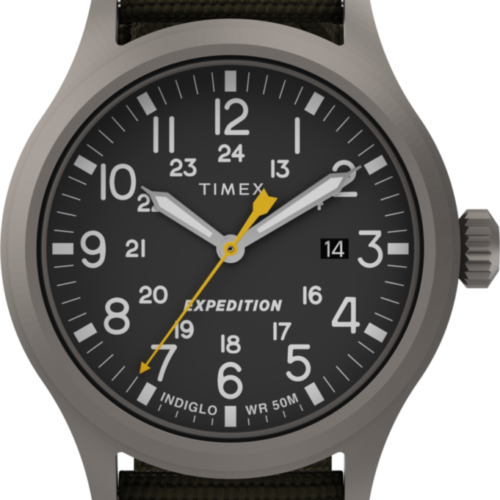
Field
Originally a soldier’s watch: full numerals, high contrast, light, usually on a leather or fabric strap. The most versatile type if you only own one watch.
What to know: the plain looks that make it versatile also make it the least “special”. Water resistance on ours is 100 m, fine for swimming but not diving.
Dress
Slim (ours are 7 mm), quiet dial, leather strap or a slim bracelet. Made to slip under a cuff and stay out of the way.
What to know: dress watches are the least water resistant (30 m on ours — splashes only, no swimming) and the least legible at night because there is little or no lume. They are for the office and the evening, not the beach.
Our short answer
- Only one watch, worn every day → Field or a 38–40 mm quartz.
- You like mechanical things and do not mind setting the time → Automatic.
- You swim or want the look → Dive.
- Mostly suits and dinners → Dress.
Whatever you pick, our 30-day return policy exists so you can change your mind after wearing it around the house.
Watches mentioned in this guide
More guides
How to care for your watch so it lasts
Winding, magnets, straps, batteries, cleaning and service intervals — the few habits that make the difference between a watch that lasts and one that…
What to expect from a $150–$450 watch (and what you will not get)
Where the money goes at this price, what you genuinely do not get compared with a $3,000 watch, and the realistic accuracy to expect.
What our 24-month warranty does — and does not — cover
A plain-language version of the warranty: what is covered, the exclusions we will actually enforce, and what happens when you make a claim.